

8 Best GEO + SEO Tools for Enterprise Brands (2026 Guide)
Search is no longer limited to a list of blue links.
AI systems like ChatGPT, Google Search Generative Experience (SGE), Bing Copilot, and Perplexity now deliver direct answers, complete with sourced information.
The challenge? If your brand’s content isn’t used as part of that answer, you lose visibility before users even get to a search results page.
When someone asks a complex question today, increasingly the response does not come from a results page; it comes from an AI model providing a synthesized answer.
That answer may include citations from sources the model trusts, or it may not cite at all. It may represent your brand flawlessly, or it may repeat an outdated or oversimplified interpretation from an entirely different site.
That shift has changed the mechanics of visibility forever — and it demands that organizations rethink how they optimize their digital presence.
This guide explains how enterprise brands can build visibility in a world where Generative Engine Optimization (GEO) and traditional SEO must work together.
You will learn what GEO actually means, how it differs from classic SEO, and which technology solutions help you increase your representation in AI-generated answers while still driving growth from organic search.
Above all, this guide outlines the platforms and strategies that give you control over your digital narrative at a moment when AI systems increasingly decide what information the world sees.
What is Generative Engine Optimization?
Generative Engine Optimization (GEO) is the practice of optimizing content so that AI language models (not just search engines) can find your information, trust it, use it to generate answers, and attribute it properly.
Where SEO focuses on rankings in search results, GEO focuses on presence in answers.
To accomplish this, your content must be:
- Fact-driven, structured, and citation-ready
- Aligned with real questions users ask AI systems
- Compliant and consistently reviewed for accuracy
- Easy for models to extract and summarize
GEO is not a replacement for search engine optimization. It builds on a strong SEO foundation and extends it into AI-driven discovery, where more search journeys now begin.
Essentially, Generative Engine Optimization (GEO) is the process of optimizing content for AI and search engines so that artificial intelligence models like Google’s SGE, Bing Copilot, and ChatGPT can interpret, trust, and cite your information accurately.
GEO focuses on ensuring AI assistants both understand and trust your knowledge, which means your organization must be citable, credible, and structured in every piece of content you publish.
In practice, GEO involves refining how information is framed, labeled, sourced, and summarized. It requires consistent canonical messaging, exceptionally clear topical coverage, and factual structures that reduce ambiguity.
Models pull from billions of documents.
GEO ensures that when they answer questions about your domain, they lean on your sources as the basis of truth, not a vague summary from someone else’s site.
This matters because if a model’s response is incorrect, outdated, or based on a competitor’s interpretation, users will internalize that version as fact.
GEO is, at its core, narrative protection in the age of machine-summarized knowledge.
How GEO differs from SEO
SEO is designed to help your pages rank in search engines. GEO is designed to help your information appear within answers provided directly by machines.
Rankings matter when users are browsing a SERP. Citations and extractability matter when users avoid the SERP altogether.
SEO optimizes for visibility via links, navigation, mobile performance, and the intent signals search engines rely on.
SEO is still crucial for your brand’s success, however. It creates the authority foundations that make GEO possible. But SEO alone no longer guarantees that your brand will be present in the responses that people actually see.
In regulated industries like healthcare, this difference is far more than theoretical. A model presenting incomplete clinical guidance or citing an unverified third-party resource carries real reputational, legal, and ethical risk. GEO elevates brand safety to the same importance as visibility.
Why GEO matters for enterprise brands in 2026
AI assistants answer billions of queries annually and heavily influence purchasing decisions, learning, and professional research. Many users never click through.
The future of search belongs to brands that understand how AI and SEO now intersect. GEO bridges the gap by combining the structure and discipline of search engine optimization with the adaptability needed for AI-driven discovery.
This means brands must ensure approved messaging is the version AI systems learn and repeat, facts are accurate, current, and consistently interpreted and that content formats are machine-friendly and traceable
This goes beyond marketing, it’s about: protecting brand integrity, minimizing misinformation risk and driving discovery in new AI-native channels
Tools that enable GEO give you visibility before someone ever sees a search results page.2
The companies poised to win in this new era are not those producing the most content, but those creating the most machine-credible content, and also high quality content.
GEO reduces friction between your expertise and the systems that now mediate knowledge access.
A GEO strategy helps large organizations:
- Maintain authoritative messaging across markets and languages
- Reduce the spread of misinterpretations and inaccurate summaries
- Ensure that high-stakes content is correctly represented across AI tools
- Strengthen content governance with clear sourcing and accountability
- Capture visibility before a traditional search result is even shown
Online success in this day and age depends on being embedded in how discovery happens, not only where search engines drive clicks.
The 8 Best GEO + SEO Tools for Enterprise Brands
The following platforms represent the strongest technology available to support GEO alongside modern SEO practices. Each offers different strengths and serves different content maturity levels. These are not interchangeable — each plays a distinct role in establishing and reinforcing machine-readable authority.
Conductor
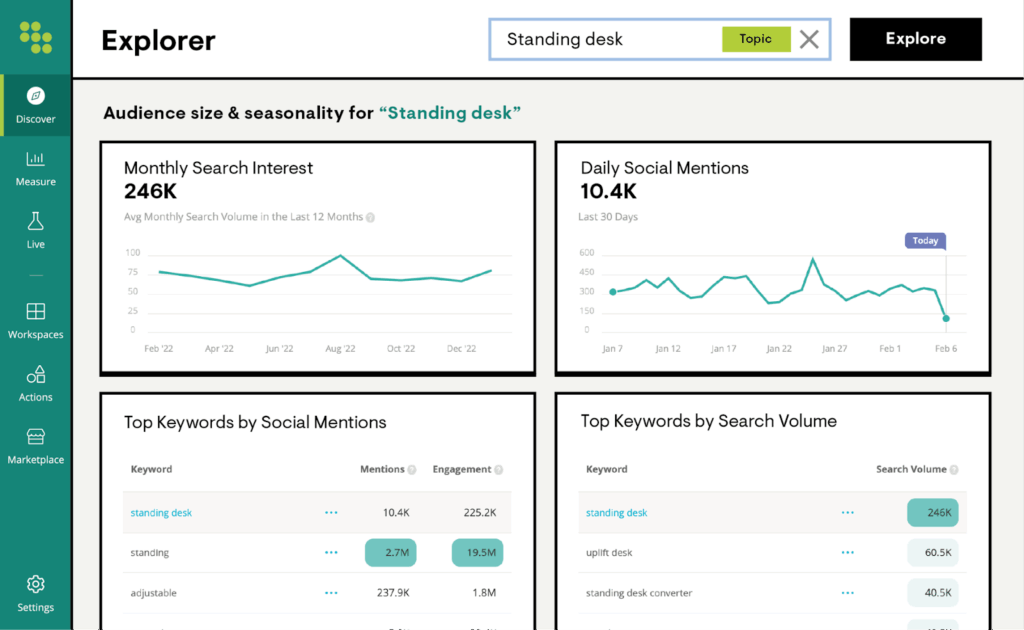
Conductor is an enterprise AI SEO and content intelligence platform that helps teams understand how their content performs across both traditional search engines and AI-driven search environments
It identifies where to improve content clarity, topical depth, and extractability, making pages more suitable as model citations. Conductor pairs analytics with workflow tools, helping content teams execute GEO improvements efficiently and safely.
In a GEO context, Conductor plays the role of the central intelligence system; a single source of truth connecting what you publish with how AI systems interpret it.
Who it’s best for
Large organizations with multiple writers, strict content approvals, and global messaging demands. If accuracy and compliance are critical, Conductor helps enforce governance at scale.
Features
- GEO visibility metrics and recommendation-based optimization
- Topic opportunity mapping based on user intent and AI query behavior
- Workflow and approvals for content governance
- Multi-channel performance attribution
- Integrations with CMS, analytics, and reporting tools
AI capabilities
- AI content assist/generation and AI Search intelligence for optimizing content for LLMs and agents.
- Automated insights and anomaly detection (site monitoring alerts.
Integrations
- Google Analytics / GA4: Conductor supports content-level analytics integration; there’s documentation for integrating GA4 with Conductor Intelligence / Creator.
- Search Console, CMS, BI/Reporting tools: Typical enterprise integrations, likely Looker Studio/BigQuery via export or API. The exact context can be confirmed in demos.
Pricing
Enterprise subscription with custom pricing depending on scale and integrations.
SEMrush
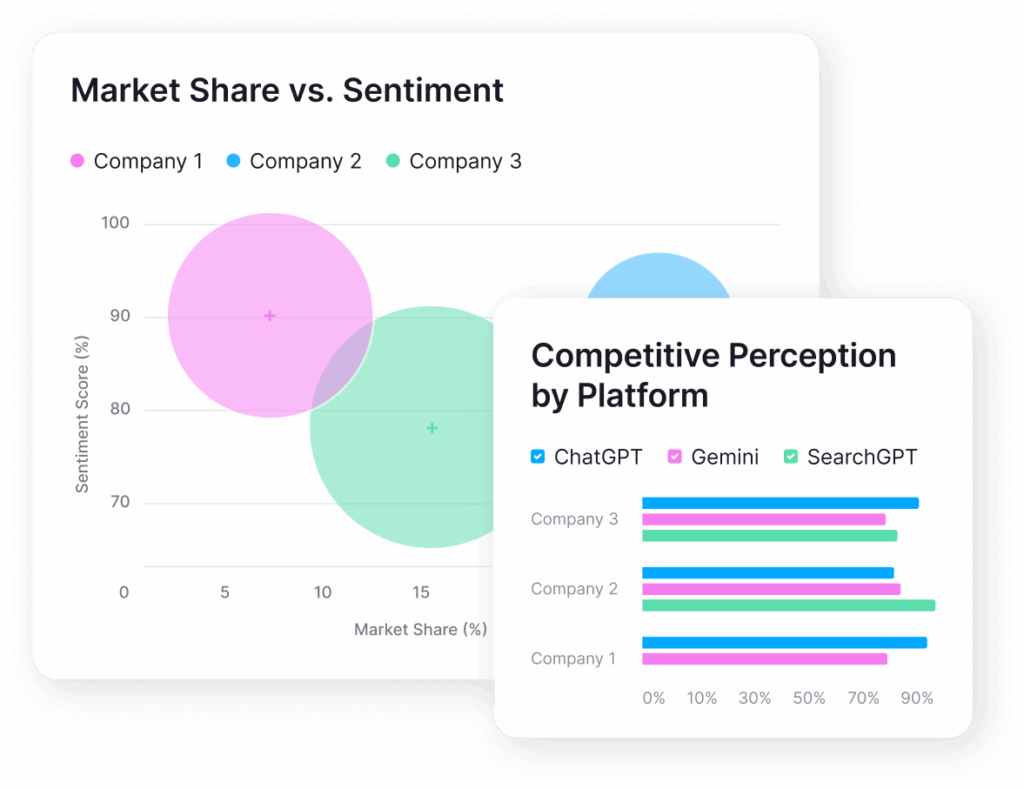
SEMrush remains one of the most versatile SEO + GEO tools. It has evolved into a complete AI SEO platform, combining classic keyword research with tools that improve visibility in AI-generated results. It helps content teams discover new opportunities and optimize writing directly within Google Docs.
SEMrush’s Writing Assistant integrates with drafting environments to provide real-time prompts that help align structural clarity and topical density with the patterns emerging in both search queries and AI-generated question frames.
Who it’s best for
Content teams writing consistently and needing practical, in-editor optimization tied to user query patterns, including those asking AI assistants.
Features
1) Organic keyword tracking (Rank Tracking & Organic Research)
SEMrush’s rank tracking and Organic Research give you a view of which keywords your site (and competitors) rank for, how positions change over time, and which pages drive traffic, along with helping you rank higher in search results..
For enterprise brands, this means you can track keywords that move the needle and signal purchase intent by country, city, or device and spot emerging regions where awareness is growing.
The rank tracker updates daily and supports competitor sets so you can benchmark against peer labs, hospital content hubs, or clinical guideline publishers.
2) AI Brand Visibility / AI SEO Toolkit
SEMrush’s AI Visibility (AI SEO Toolkit) is designed to measure how brands appear in AI/agent answers and aggregators (share-of-voice style metrics for AI results), plus detect brand mentions and sentiment across AI surfaces.
This is useful for a brand that wants to understand whether LLMs and search agents are accurately representing their content and citations for their products.
3) SEO Writing Assistant (Google Docs extension + real-time checks)
SEMrush’s SEO Writing Assistant (SWA) integrates into Google Docs and provides real-time suggestions for readability, SEO potential, originality (plagiarism checks), and tone.
For writers, it works like a co-pilot: as content is drafted, the SWA recommends target keywords, suggests semantically-related terms, flags readability or overused phrases, and scores the page against competitors.
This is critical when authors need to produce factually accurate, compliant, yet search-optimised copy.
Integrations & platform ecosystem
- GA4 & Google Search Console: SEMrush projects integrate with analytics for richer reporting and conversion mapping.
- Google Docs: SWA Google Docs add-on for writer workflows.
- Looker Studio / BI: data can be exported and used in dashboards.
- Third-party connectors: Many enterprise connectors exist for marketing stacks and CRMs.
Pricing
Tiered subscription (Pro, Guru, Business, Enterprise). AI features often require upper tiers.
Clearscope
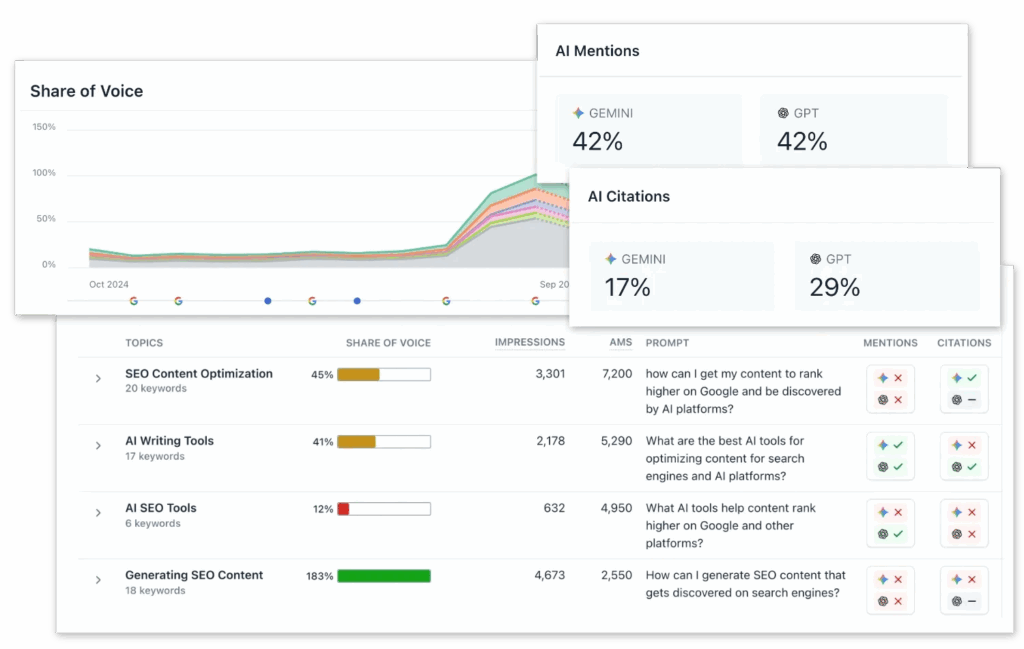
Clearscope specializes in content depth and completeness. If your organization is responsible for educational content like scientific explanations, condition overviews, procedural content, or product efficacy information, Clearscope ensures that information meets the expectations of semantic understanding engines rather than merely matching a keyword.
It guides teams toward writing that reflects full subject-matter authority and is structured in a way that models prefer to reference.
This level of detail becomes the difference between being cited as a primary source versus being ignored or replaced by a more complete alternative.
Who it’s best for
Teams that publish educational, scientific, or product-driven content where every claim must be correct, comprehensive, and verifiable.
Features
1) Content Grader
Clearscope creates a topic report for a target keyword that lists recommended terms, content length, and semantic coverage.
The grader scores your draft against the top-ranking pages and suggests missing terms and topic clusters. For clinical pages (e.g., product pages or patient info sheets), Clearscope helps ensure the article covers relevant subtopics that physicians or patients expect to see.
2) AI recommendations for keywords & topics
Clearscope applies NLP to generate semantic keyword recommendations and organize topic clusters. It surfaces relevant phrases and related questions to include, helping capture both primary organic keywords and a wider set of supporting search queries that boost topical authority.
3) Content Inventory & Tracking
Clearscope offers a content inventory so you can see what pages exist, which ones track particular topics, and where your highest-impact optimization opportunities lie. This is valuable for clinical documentation, where version control and review steps are important.
Integrations & workflow
- Google Docs / WordPress export: Clearscope integrates with writing workflows so writers can optimise in their preferred editor.
- Analytics exports / Looker Studio: content performance metrics can be exported for reporting.
- Team & approvals: Clearscope has features for content inventory and collaboration (useful for clinical sign-offs).
Pricing
Subscription-based, with enterprise plans for multi-team governance.
Profound
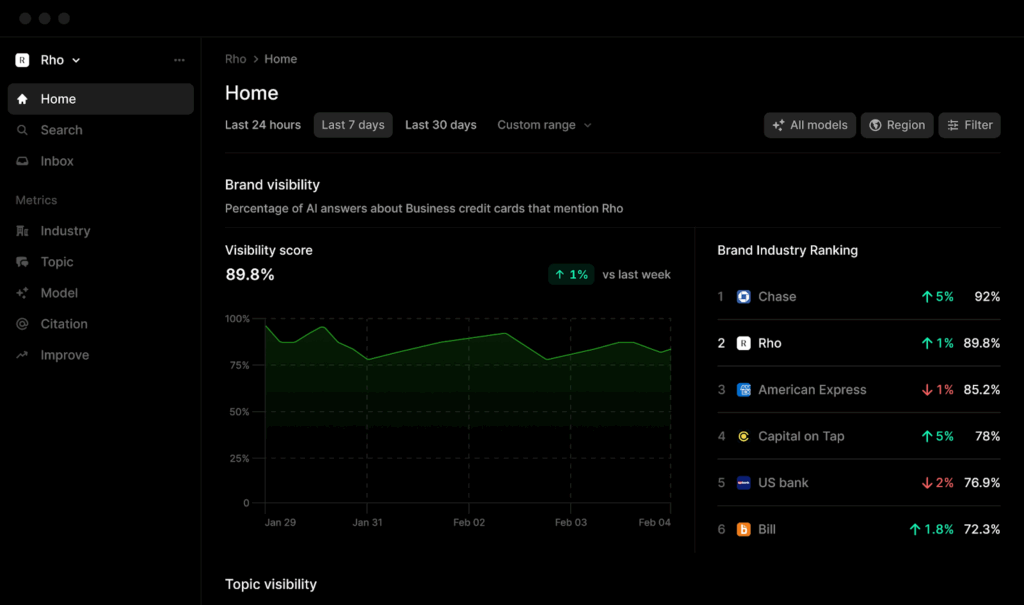
Profound introduces an entirely new visibility metric: where models currently cite you and how accurately they do it.
Essentially, Profound helps you monitor where your content appears in AI-generated answers and where it should. It tracks prompt demand, citation sources, and information accuracy across models.
It exposes the gap between what you have published and what AI answers publicly present, and reveals which other websites currently control the narrative in your topic area.
This capability is especially critical in healthcare, law, or finance, where brands are held responsible for the accuracy of information attributed to them.
Who it’s best for
Brands that rely on trust and authority, like healthcare, must ensure models are citing up-to-date information.
Features
1) Prompt Volumes & AI search demand
Profound’s Prompt Volumes estimates how often particular prompts are asked of AI platforms. For brands in regulated industries like healthcare, this could reveal how often clinicians or patients ask diagnostic or product-related prompts (e.g., “molecular tests for HER2 status”), letting you prioritise content and citations where demand exists.
2) AI citation & answer analysis
Profound shows which websites are being cited by AI answers for a topic and how often. That allows you to identify the citation sources feeding AI answers and where brands should be prioritized to be that citation source. This is especially critical in healthcare, where authoritative citations are required for trust and compliance.
3) Monitoring & alerts
Track daily/weekly how AI mentions your brand and detect when AI outputs include inaccuracies. This supports a content-governance workflow that can proactively fix misinformation.
Integrations
- Exports (CSV/JSON) for BI and Looker Studio.
- API / reporting for enterprise workflows (can be confirmed in demo).
- Prompt-tracking dashboards built for AI search optimization.
Pricing
Subscription model with tiered coverage. Pilot options available.
Scrunch
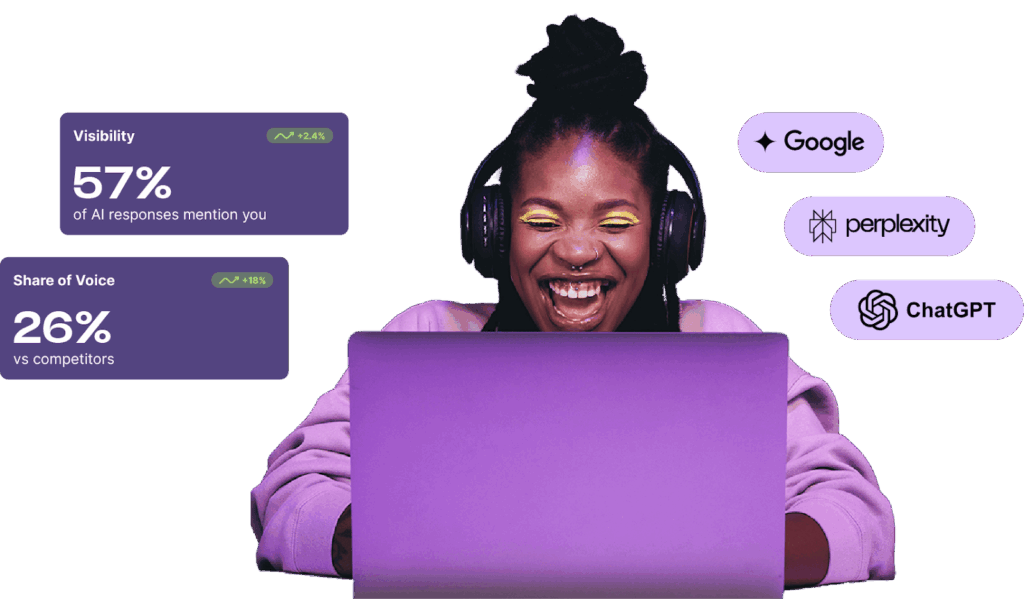
Scrunch specializes in persona-driven GEO.
Not all AI answers assume the same audience in terms of the tone, complexity, and recommendation patterns. They differ significantly between clinicians, executives, consumers, and researchers.
Scrunch identifies these differences and helps organizations create content variants tailored to each perspective so that models respond accurately based on the user’s intent.
For enterprise brands serving multiple audiences, this prevents generalized or oversimplified answers and preserves message nuance across contexts. Scrunch becomes particularly valuable when precision and audience relevance carry high stakes for brand trust.
Who it’s best for
Enterprise brands with multiple audiences, where accuracy and tone need to adjust by context.
Features
1) Prompt & persona monitoring
Scrunch lets you define personas and monitor how AI answers differ by persona or prompt cluster. This is helpful to ensure provider-targeted pages surface different phrasing and evidence levels than client-facing pages.
2) AXP (AI Experience Platform)
Scrunch’s AXP can generate AI-optimised page variants intended to be more discoverable by LLMs and answer engines. This helps create content formats that align with how AIs prefer to cite or summarise authoritative data (bulleted facts, key citations, structured Q&A).
3) Page audits & optimisation
Scrunch offers page audits to surface which pages are exposed to AI prompts and how they perform across monitored prompts. It flags opportunities to improve structure, schema, and content for AI citations.
Integrations
- Export & reporting for Looker Studio and BI.
- Persona-driven prompts to monitor different user journeys.
- APIs for enterprise workflows (confirm with sales).
Pricing
Recurring subscription with enterprise upgrades for additional persona mapping.
Botify
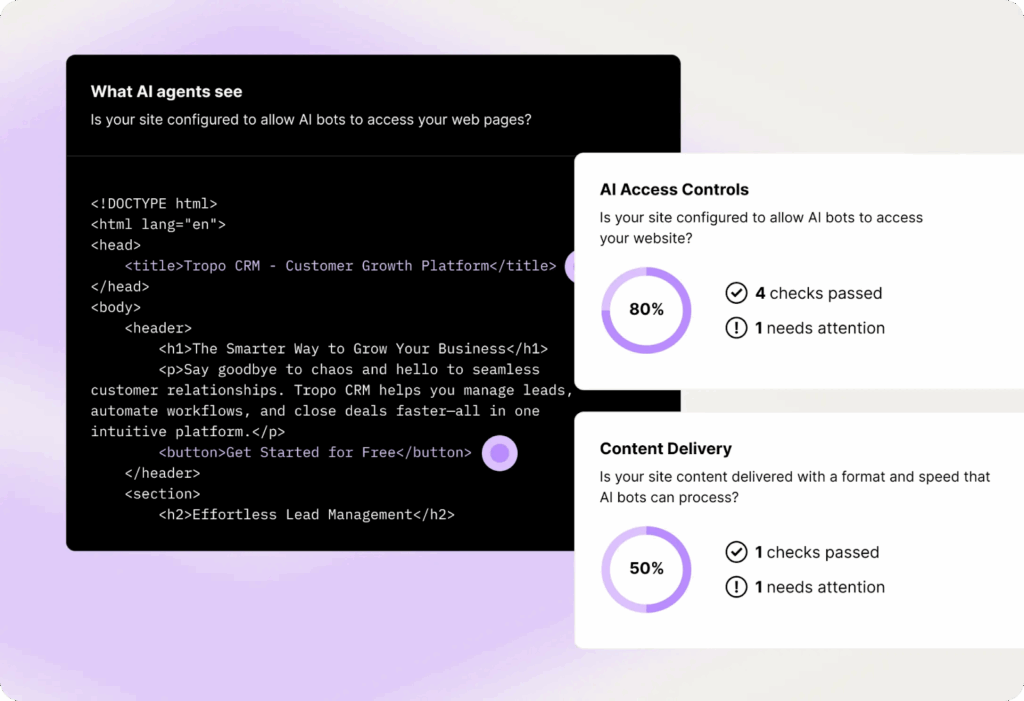
Botify sits at the foundation of GEO and SEO: discoverability and structural integrity. AI models cannot cite what they cannot access, and they cannot properly interpret content that is technically misconfigured. Botify ensures large sites maintain rock-solid indexation, schema consistency, logical architecture, and compliance with emerging machine-readability standards. It prevents issues that silently undermine citation potential across thousands of pages.
Botify tackles the technical foundation of GEO and SEO, from indexability to structured discoverability. Models can’t cite what they can’t find or parse. Botify ensures correctness at scale, especially for large sites.
Who it’s best for
Enterprise websites with thousands of URLs, complex architectures, and constant publishing.
Features
- Crawl and indexation diagnostics
- Schema and structured data validation
- Log analysis to track bot and model access
- Engineering workflow automation
Integrations
- GA4 and server/log integrations; often connects to data lakes and BI tools for deep analysis. Confirm via sales.
Pricing
Enterprise-tier with pricing tied to scale and environments monitored.
seoClarity
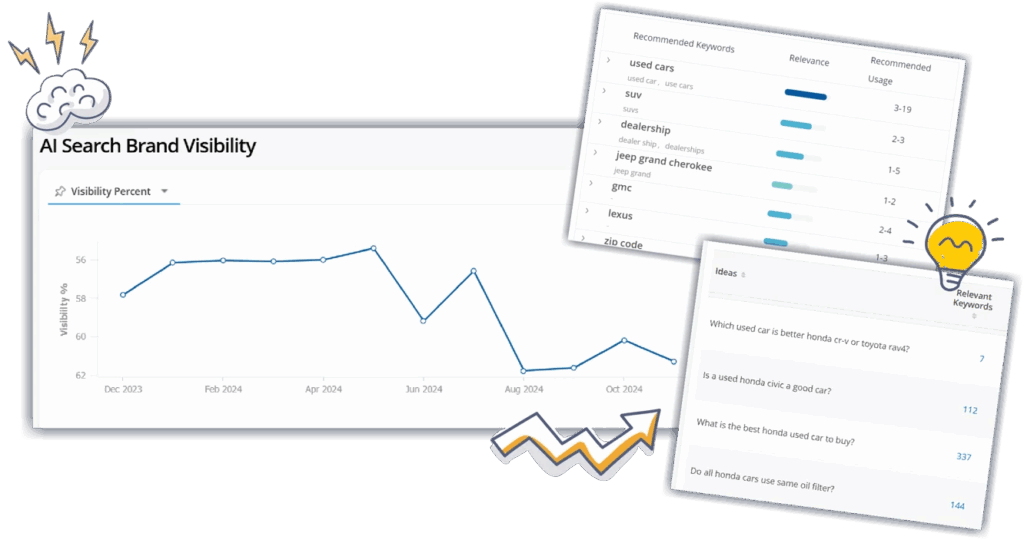
SEOClarity provides predictive data to prioritize GEO upgrades with the biggest future impact. It allows leaders to justify investment in content restructuring based on projected ROI, not guesswork.
Through forecasting and deep performance modeling, it highlights which content deserves repositioning, which topics merit expansion, and where structured improvements could unlock significantly higher authority perception by models.
Who it’s best for
Organizations with complex content ecosystems needing data-driven decision making and forecasting.
Features
- Predictive modeling of content performance
- Unified dashboards combining technical + content metrics
- Content insights with business KPI alignment
- Deep analytics integrations
Integrations
- GA4, GSC, BI tools. Enterprise integration support; requires sales contact for more detail
Pricing
Enterprise subscription depending on integration scope and data needs.
DemandSpring

DemandSpring is not a software tool, it is a strategic services partner specializing in marketing technology integration, workflow enablement, and organizational adoption.
The best technology in the world cannot drive GEO impact if internal processes do not support accuracy, approvals, and change management. DemandSpring helps implement the operational foundation that ensures messaging alignment and compliance remain intact throughout content development.
They guide everything from martech stack alignment to enabling writers and reviewers to apply GEO best practices every day.
Who it’s best for
Brands needing help operationalizing GEO, especially those with regulated messaging and complex martech ecosystems.
DemandSpring is best for enterprise organizations that want GEO embedded as a core function, not a one-off campaign. For teams where governance requirements are strict, such as healthcare, DemandSpring reduces risk while increasing execution pace.
Features
- Martech deployment and integration (CMS, GA4, SEO platforms)
- Governance frameworks to ensure accuracy and compliance
- Training for writers and content teams on GEO methods
- Performance monitoring dashboards and reporting
- Program management and rollout support
AI Capabilities
- Operationalize SEO recommendations – content production pipelines, link acquisition workflows.
- Martech & analytics integration – GA4, CRM, marketing automation platforms.
- AI content activation – automating content personalization and scaling content programs safely.
Integrations
- Works across common enterprise martech (CRM, MAPs, analytics). They act as the integrator/agency, not a proprietary SEO engine. The exact platforms need to be confirmed.
Pricing
Customized based on project scope, internal resourcing, and technology stack.
How to Choose Your GEO Technology Stack
There isn’t a single “best” tool in this list, and that’s the first thing any enterprise team should understand. GEO and SEO work together, and so should the platforms you choose.
What really matters is finding the mix that supports how your team works, how fast you publish, and how much accuracy matters in your space.
For most enterprise brands, especially those that deal with complex or regulated information, we recommend a three-layer approach:
1. The intelligence layer: Where you decide what to improve (conducting research, spotting opportunities, tracking visibility). A platform like Conductor is ideal here. It gives you a top-down view of what matters, what models respond to, and which pages carry the most strategic value.
2. The content quality layer: Where your message becomes extractable and trustworthy (writers create content models can understand and cite). Tools like Clearscope or SEMrush improve writing quality and structure. They help your team turn subject matter expertise into content that both humans and AI recognize as authoritative.
3. The protection layer: Where you ensure models actually use the facts you provide (monitoring citations, fixing misrepresentation, reinforcing trust signals). Profound plays a key role here, revealing where AI gets things right and where it doesn’t. Scrunch can then strengthen your messaging for different audiences and prompt styles.
Then, underpinning everything, a tool like Botify ensures AI systems and crawlers can reliably access your content. And SEOClarity helps leadership clearly see where to focus and how to justify investment.
When these layers are working together, GEO stops being a “project” and becomes a natural extension of how you publish and maintain digital content.
But here’s the thing: tools alone won’t unlock the full impact.
What’s most important is how quickly and consistently GEO practices become part of your team’s everyday habits. That’s where a digital partner like Creativeform can guide strategy, accelerate adoption, and keep your brand’s information accurate everywhere your audience searches.
So our recommendation isn’t just which tool to use. It’s building the right system, one that supports governance, creativity, and truth at scale.
A practical starting point for most enterprises looks like this:
- Use Conductor for insights and prioritization
- Use Clearscope or SEMrush for content development
- Use Profound (and if needed, Scrunch) to protect brand accuracy in AI outputs
- Use Botify to maintain technical discoverability
- Use seoClarity when you need long-term forecasting and organizational alignment
This gives you exactly what GEO requires.
From there, as your team grows more comfortable managing content for AI-driven discovery, you can scale up the program, either expanding coverage or increasing audience segmentation.
Don’t wait for AI to decide what version of your story the world should hear. Choose the tools and workflows now that guarantee it will be your story, correctly told.
.
Why Enterprise Brands Still Need a GEO-Focused Agency
Tools are powerful, but tools don’t create strategy, governance, or adoption. GEO success requires:
- Editorial discipline
- Technical SEO foundations
- Clear canonical messaging
- AI citation monitoring
- Compliance oversight
- Analytics and constant optimization
A digital marketing agency like Creativeform helps enterprises identify the highest-value content to optimize first, create a comprehensive marketing strategy, conduct keyword research, build editor-friendly structures for AI consumption, track how models represent your brand over time, replace outdated or incorrect citations quickly and govern voice, claims, and compliance at scale.
GEO is fundamentally cross-disciplinary. It requires editorial expertise, technical SEO skill, legal review checkpoints, analytics fluency, and product knowledge, often spanning multiple departments that rarely collaborate.
Technology provides visibility and guidance.
But expertise provides the judgment, prioritization, and accountability required for performance.
An agency ensures:
- Clear ownership over narrative protection
- Rapid adoption of new standards as AI evolves
- Scaled operational governance across every content stream
- Collaboration that transcends internal silos
- A proactive approach that prevents misinformation incidents
Brands who view GEO as a software purchase alone will never realize its strategic value. Brands who treat it as a transformation in how information is represented and maintained will establish a durable competitive advantage.
Frequently Asked Questions about GEO
Is GEO replacing SEO?
No. GEO builds on SEO. Without crawlable, authoritative, structured content, models won’t find or trust you.
How do we measure GEO success?
Tracking shifts in AI citations, model accuracy, and new traffic from AI-driven sessions.
Do we need new content exclusively for GEO?
Not always. Often GEO focuses on optimizing your existing high-value pages.
Which AI platforms should we track?
Google SGE, Bing Copilot, ChatGPT, Perplexity, and platform-specific answer agents depending on your market.
The Future of Search Belongs to Brands Prepared for AI
The way users discover information is evolving, and rapidly. AI-generated answers are stealing clicks from traditional search, shifting visibility to sources models cite, not just pages that rank.
Enterprise brands that embrace GEO now will:
- Dominate high-intent queries in AI environments
- Protect narrative accuracy and compliance
- Win new traffic from the fastest-growing discovery channels
The ones that wait will struggle to reclaim visibility they once owned.
If you want a strategic partner to lead the way, from assessment to execution, Creativeform is here to help. Let’s make sure your content is the source AI depends on.
Ready to be discovered where modern search truly happens? Contact us.